Understanding AI Video Generators and World Simulation

Recent technological shifts in artificial intelligence have brought significant attention to automated video creation tools, according to a report by Unite.ai. The publication outlines how modern generative video systems have evolved beyond basic image sequencing to implement sophisticated diffusion processes and world simulation frameworks.
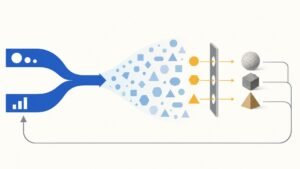
As detailed by Unite.ai, these video generators rely on deep learning architectures that interpret textual prompts or initial frames to predict subsequent pixel changes over time. By incorporating diffusion models, the systems gradually remove noise to construct coherent visual outputs frame by frame. Furthermore, advanced platforms are beginning to experiment with world simulation concepts, attempting to model physical interactions, lighting constraints, and motion dynamics within a virtual environment.
The evolution of these tools marks a critical step for developers and enterprises building media production software. While early iterations struggled with temporal consistency and object permanence, current models utilize larger neural networks and specialized training datasets to maintain continuity across longer video sequences.
Industry analysts note that as video generation technology matures, developer platforms are increasingly integrating these capabilities into commercial product suites. Understanding the underlying mechanics of diffusion and simulation helps enterprise buyers and technical teams evaluate the capabilities and current limitations of emerging AI video products.
Based on reporting by www.unite.ai.